Entry 13 · Section 2: Build
Fuller sample entry
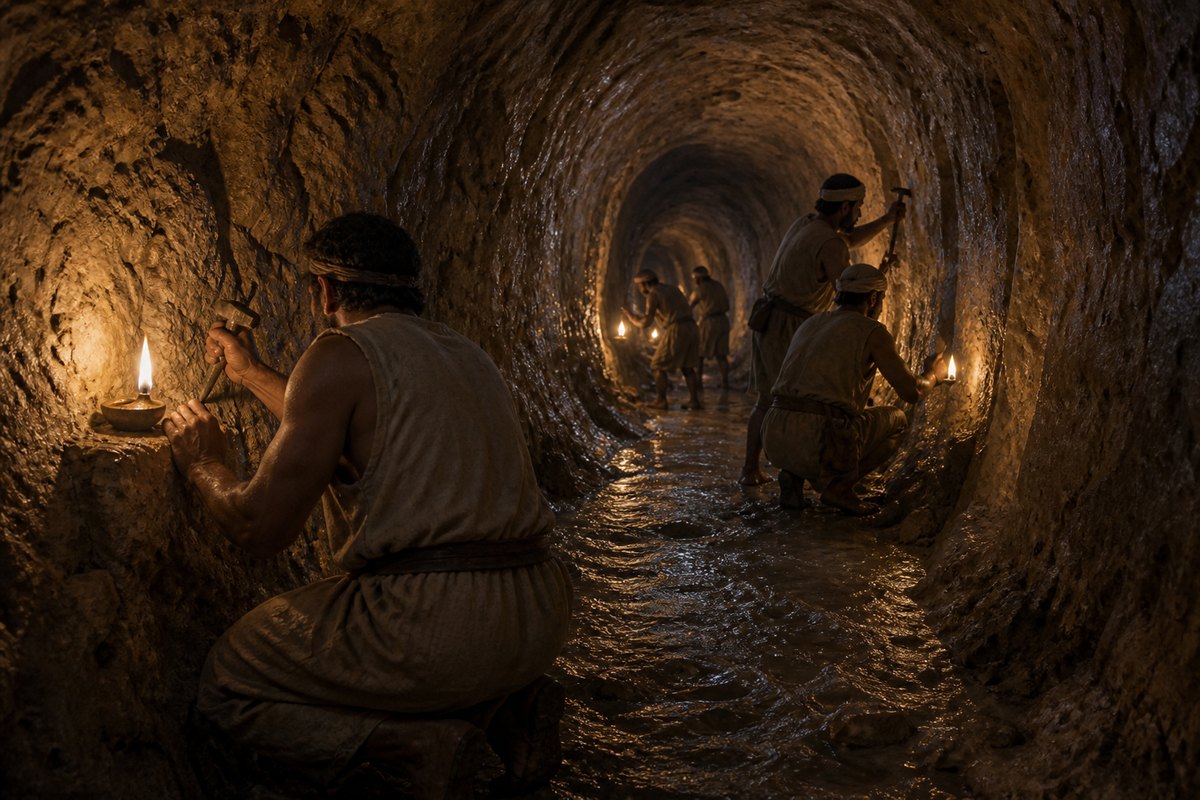
Hezekiah's Tunnel
Two teams cut through Jerusalem's bedrock to bring spring water inside the city's defenses.
Scripture: 2 Kgs 18:31; 20:20; 2 Chr 32:2–4, 30
Civil Eng.SurveyingGeologyHydrologyPublic Health
The question
How did a tunnel more than 1,700 feet long maintain flow with only about one foot of total fall?
Why it matters
A tiny controlled gradient, a winding route, and a two-team breakthrough made the tunnel both a hydraulic and surveying achievement.
From the opening
Jerusalem's water supply depended on bringing spring water to a protected destination inside the city. The conduit associated with Hezekiah bends through bedrock until it reaches the Pool of Siloam, allowing water to arrive without remaining exposed outside the defenses. The biblical verses name the water project; the surviving channel supplies the length, gradient, cross-section, and meeting-point evidence examined here.
This sample stops before the full calculation, sensitivity analysis, and conclusion presented in the book.