Entry 33 · Section 4: Grow
Fuller sample entry
Storing Grain for Seven Years
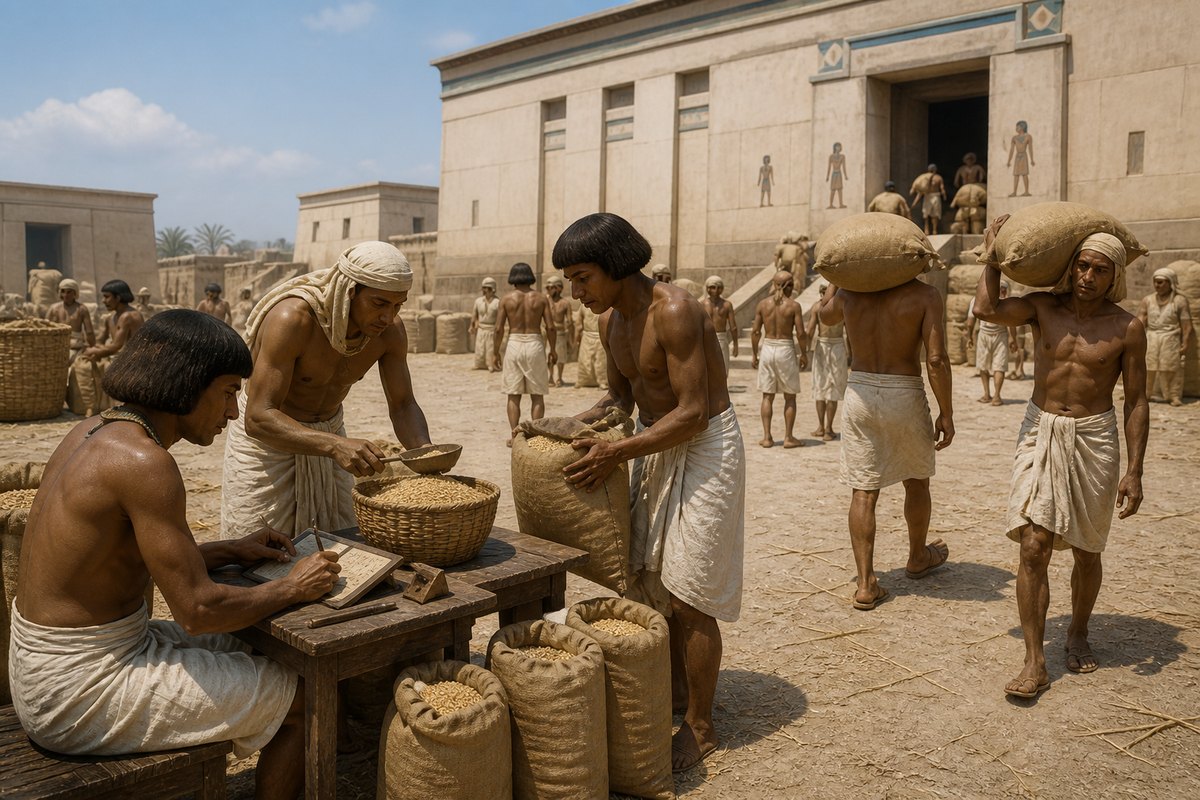
Joseph collects one fifth of seven abundant harvests into city storehouses before seven famine years begin.
Scripture: Gen 41:33–57
Food ScienceLogisticsOperations ManagementAgriculture
The question
Under what minimum harvest, spoilage, and consumption conditions can the stored grain last through all seven famine years?
Why it matters
The plan succeeds through repeated collection, distributed storage, custody, and controlled release, not through one undifferentiated pile of grain.
From the opening
Pharaoh's dreams announced two sharply different periods: seven years of abundance followed by seven years of famine. Joseph proposed collecting one fifth during the productive years and storing food in the cities before scarcity arrived. The plan is both a story of providence and a national inventory problem. Its stated deposits and withdrawals can be tested once the unstated harvest, population, consumption, and storage-loss assumptions are declared.
This sample stops before the full calculation, sensitivity analysis, and conclusion presented in the book.