Book sample
Ten ways to see a familiar passage at measurable scale
These expanded previews establish each scene and question. The book carries every examination through its assumptions, calculations, comparisons, illustrations, and limits.
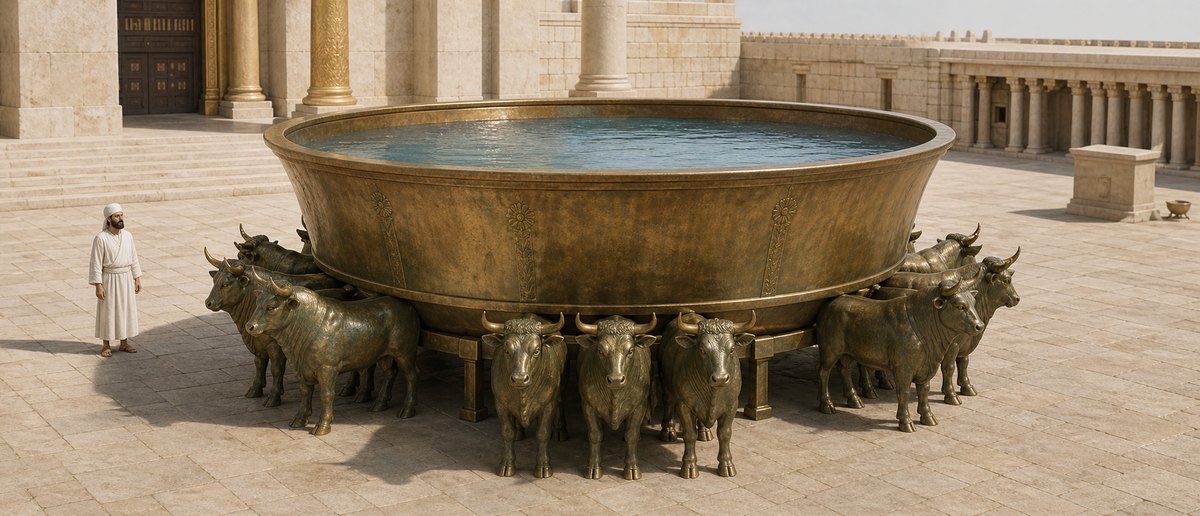
Entry 2 · 1 Kgs 7:23–26
Priests draw washing water from the immense round bronze basin resting on 12 oxen in Solomon's Temple courtyard.
Before entering Solomon's Temple, the priests washed with water drawn from an enormous bronze basin known simply as the Sea. Resting on twelve bronze oxen in the Temple courtyard, it transformed the tabernacle's modest washbasin into a monumental feature of Israel's worship center. The Bible then describes it with unusual numerical detail, making its reported size and capacity open to direct examination.
The complete entry continues in the book with its model, illustrations, sensitivity cases, and source notes.
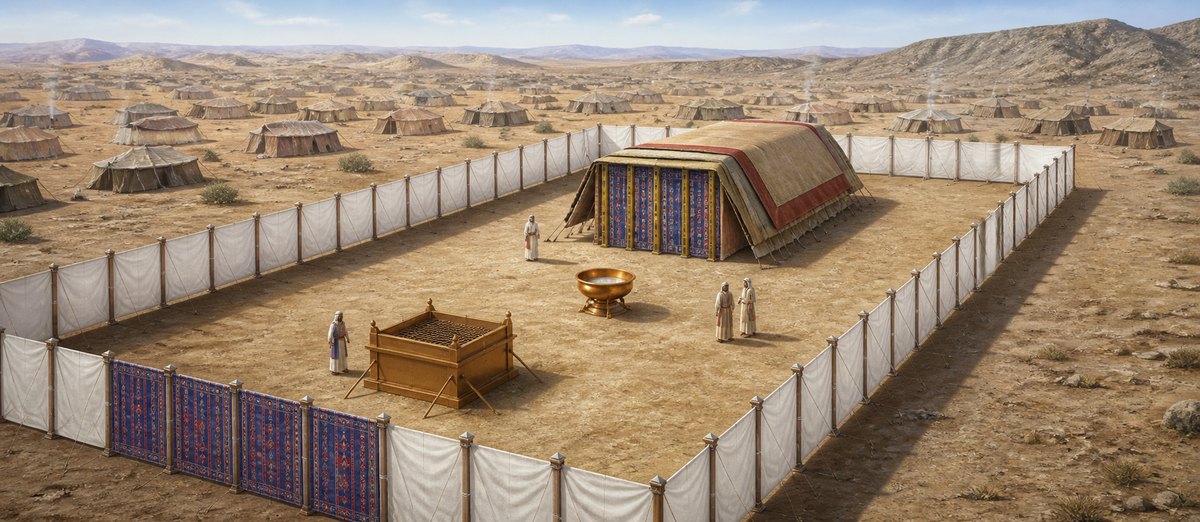
Entry 11 · Ex 26; 36; 38:24–31
Israel erects, dismantles, and carries a measured sanctuary at the center of the wilderness camp.
At the center of Israel's camp stood a portable sanctuary. Its boards, bases, curtains, coverings, and furnishings could be assembled for worship and taken apart when the nation moved. Exodus describes that structure twice—first as instructions and then as completed work—turning the tabernacle into both a sacred place and a detailed transport problem.
The complete entry continues in the book with its model, illustrations, sensitivity cases, and source notes.
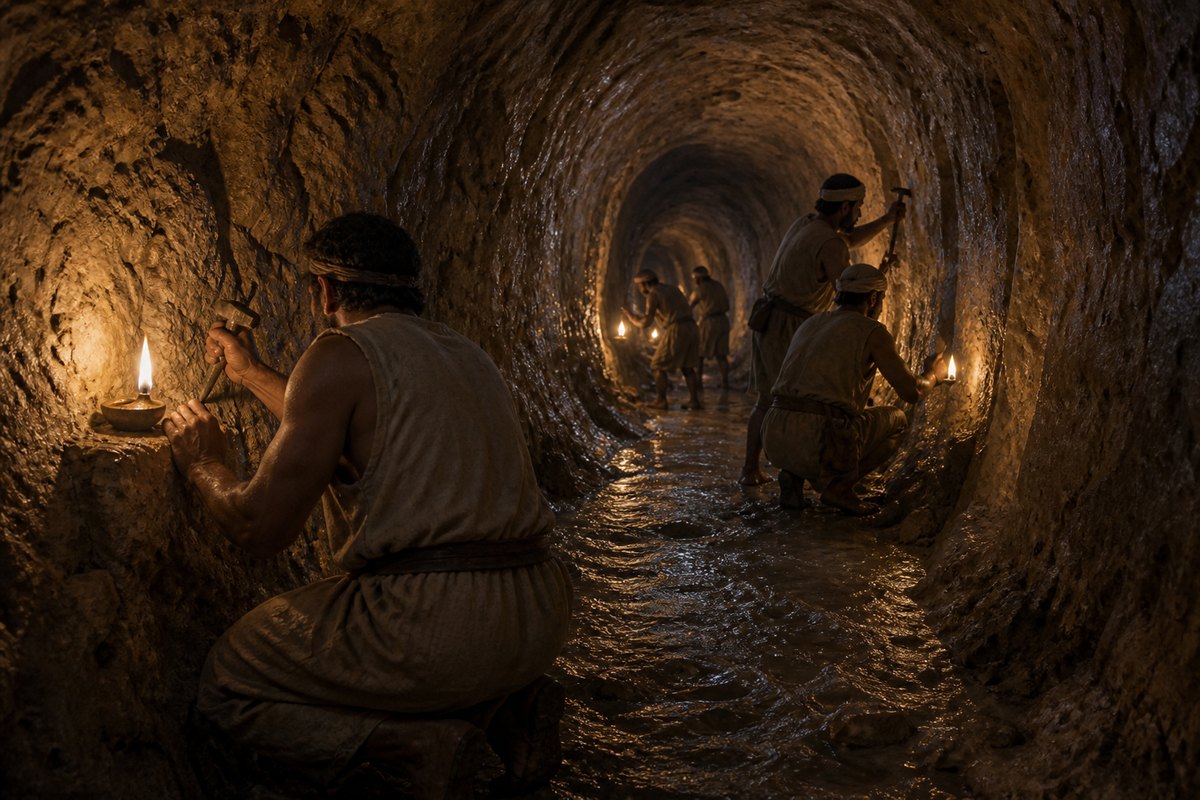
Entry 13 · 2 Kgs 18:31; 20:20; 2 Chr 32:2–4, 30
Two teams cut through Jerusalem's bedrock to bring spring water inside the city's defenses.
Jerusalem's water supply depended on bringing spring water to a protected destination inside the city. The conduit associated with Hezekiah bends through bedrock until it reaches the Pool of Siloam, allowing water to arrive without remaining exposed outside the defenses. The biblical verses name the water project; the surviving channel supplies the length, gradient, cross-section, and meeting-point evidence examined here.
The complete entry continues in the book with its model, illustrations, sensitivity cases, and source notes.
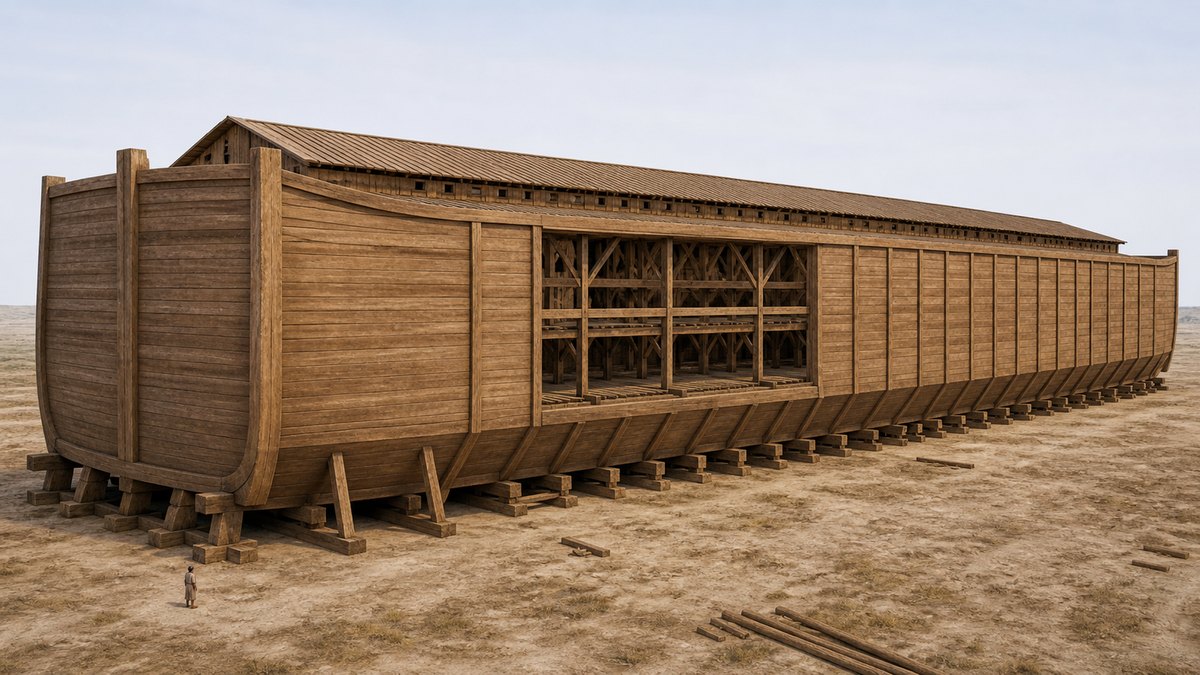
Entry 15 · Gen 6:14–16
Noah builds a three-deck ark with a side door and upper opening to preserve his household and living creatures through the Flood.
Before the Flood, Noah received instructions for a vast vessel with a door in its side, an opening near the top, and three internal levels. Its purpose was preservation: Noah's household and the living creatures brought aboard would survive the waters inside it. Genesis gives the ark's overall length, breadth, and height, but not the curved or tapered hull form a naval drawing would normally require.
The complete entry continues in the book with its model, illustrations, sensitivity cases, and source notes.
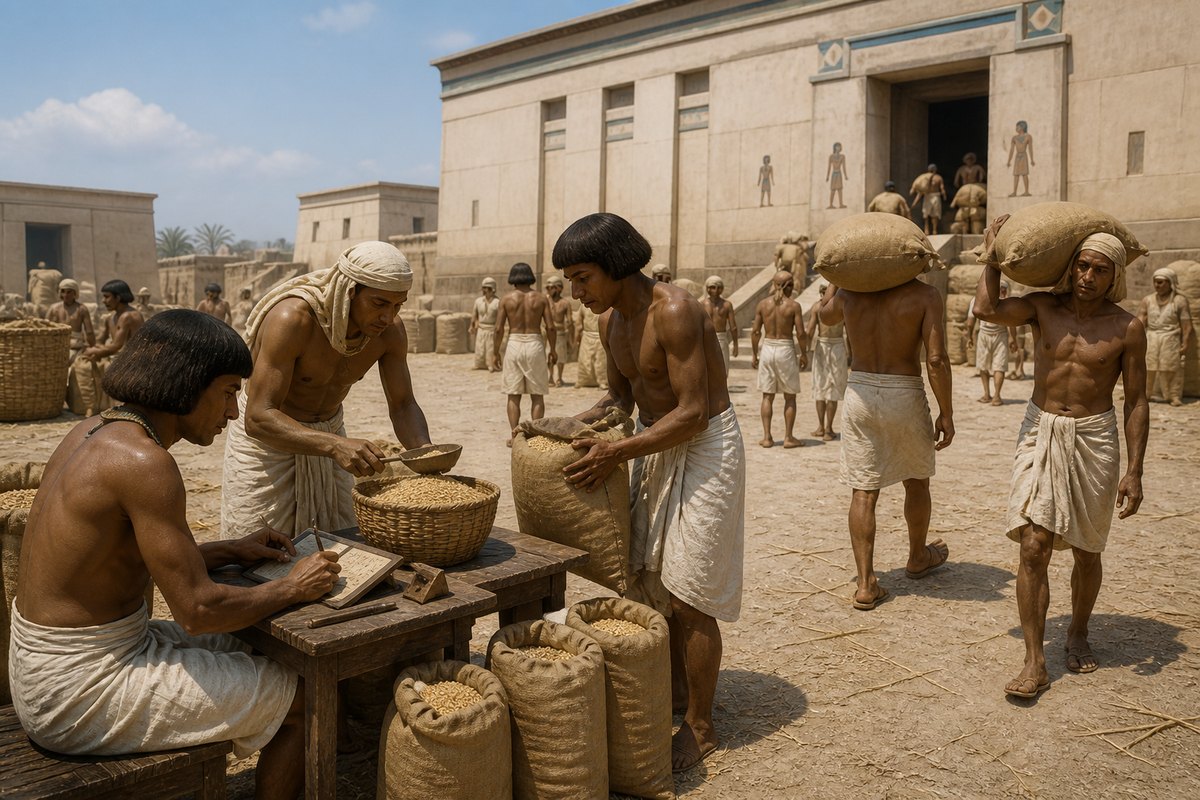
Entry 33 · Gen 41:33–57
Joseph collects one fifth of seven abundant harvests into city storehouses before seven famine years begin.
Pharaoh's dreams announced two sharply different periods: seven years of abundance followed by seven years of famine. Joseph proposed collecting one fifth during the productive years and storing food in the cities before scarcity arrived. The plan is both a story of providence and a national inventory problem. Its stated deposits and withdrawals can be tested once the unstated harvest, population, consumption, and storage-loss assumptions are declared.
The complete entry continues in the book with its model, illustrations, sensitivity cases, and source notes.
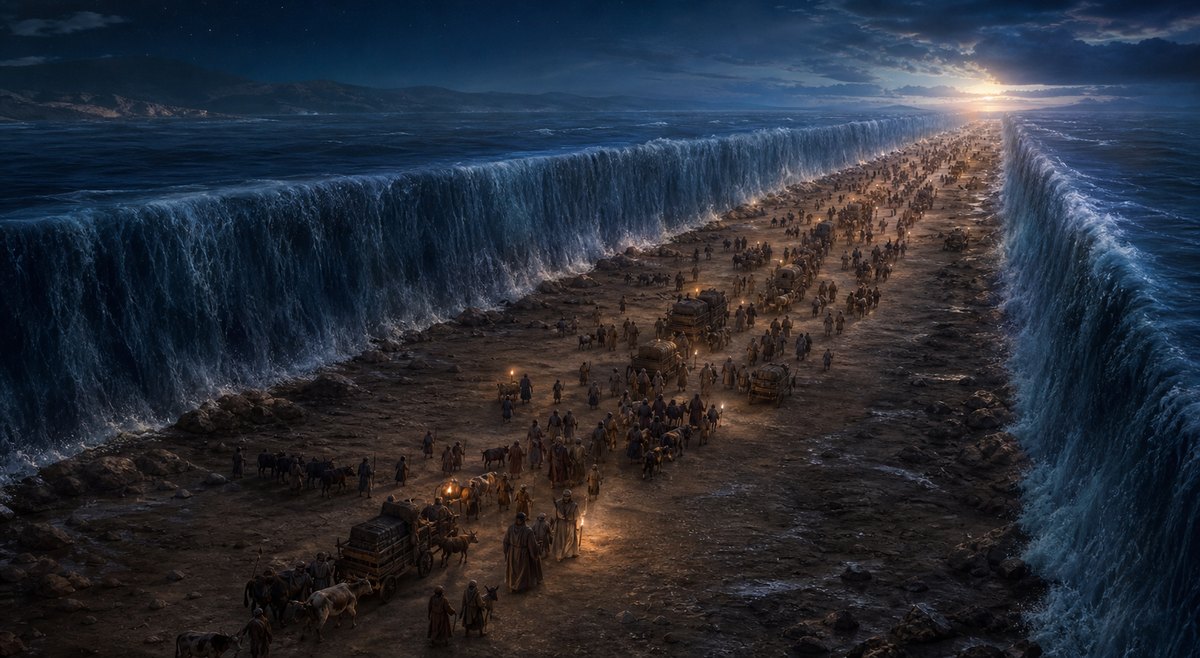
Entry 54 · Ex 14:21–29
Israel crosses the sea at night on dry ground between walls of water while the Egyptian force follows.
Israel reached the sea with Pharaoh's force behind them. At God's command Moses stretched out his hand, the waters divided, and the people crossed through the night on dry ground with water on both sides. The Egyptians followed, and the water returned when Moses acted again. The miracle is the commanded division, crossing, and return; corridor geometry only measures the minimum physical space implied by the account.
The complete entry continues in the book with its model, illustrations, sensitivity cases, and source notes.
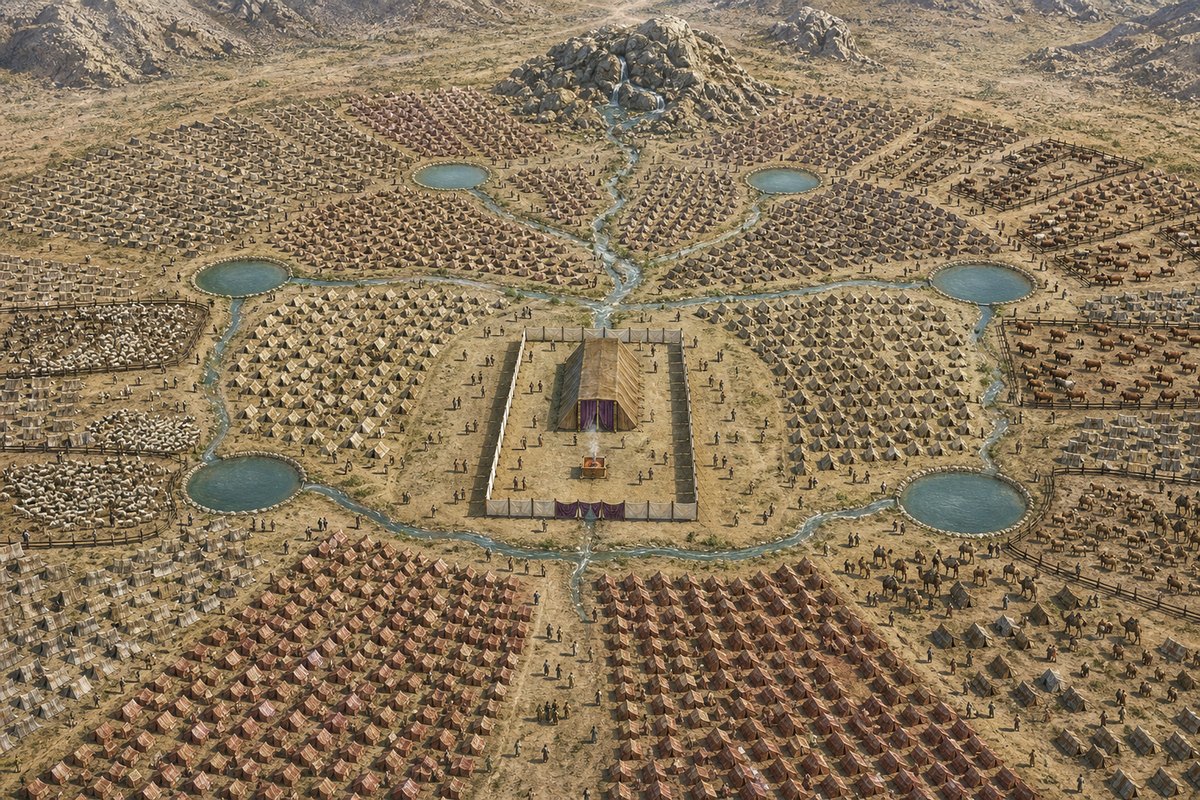
Entry 55 · Num 2; Ex 16; Ex 17:1–7
Tribal camps surround the tent of meeting while miraculous manna and water from the rock sustain the nation each day.
At the center of the wilderness camp stood the tent of meeting, with tribal divisions arranged around it. Beyond the tents were animals, roads, gathering places, sanitation needs, and the constant movement required to distribute food and water. Exodus describes manna appearing for daily collection and water coming from the rock at God's command. The scene is miraculous provision operating at the scale of an entire nation.
The complete entry continues in the book with its model, illustrations, sensitivity cases, and source notes.
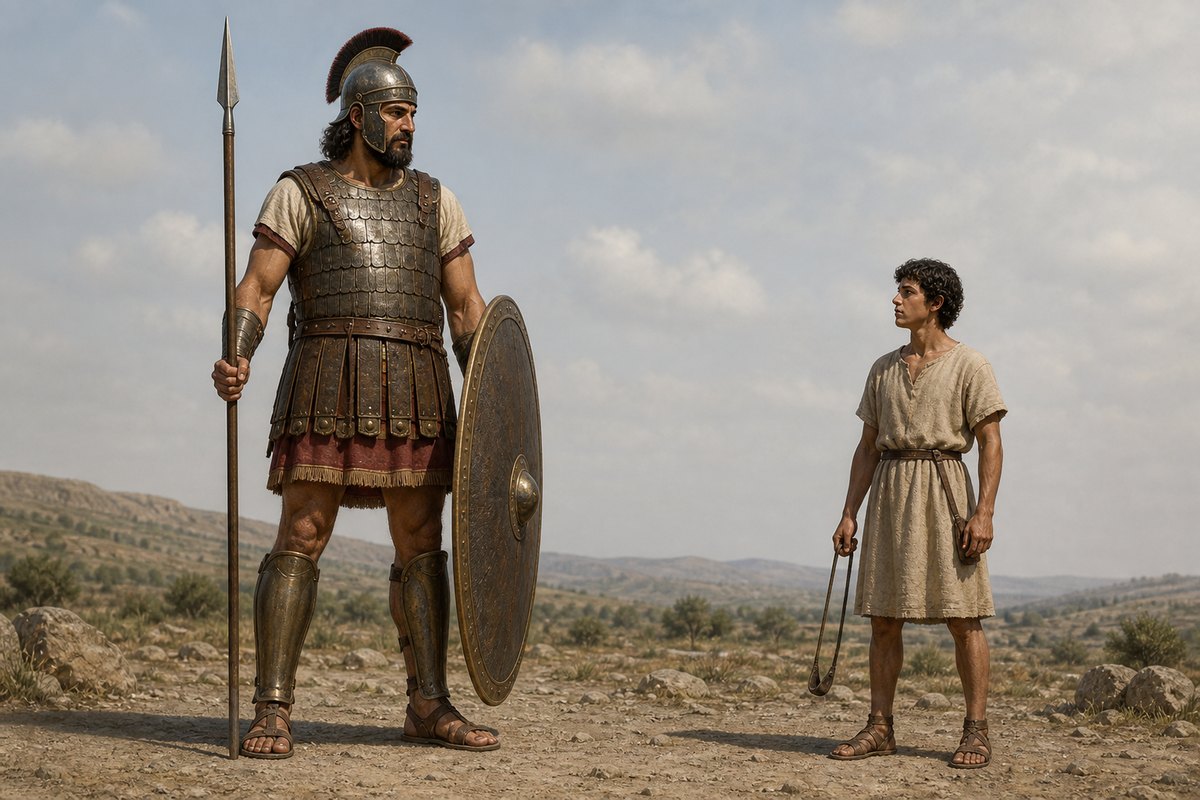
Entry 65 · 1 Sam 17:4–7, 40, 49
David approaches an armored champion with a shepherd's sling and stones chosen from a brook.
Goliath entered the confrontation as a heavily equipped Philistine champion whose stature, armor, and spearhead are reported in measured units. David approached without adopting the conventional armor offered to him. He carried his staff, selected smooth stones, placed one in a sling, and released it. The familiar contest places distributed armor, a heavy spear, and a fast projectile into one mechanical comparison.
The complete entry continues in the book with its model, illustrations, sensitivity cases, and source notes.
Entry 75 · Gen 7:11–24; 8:1–14
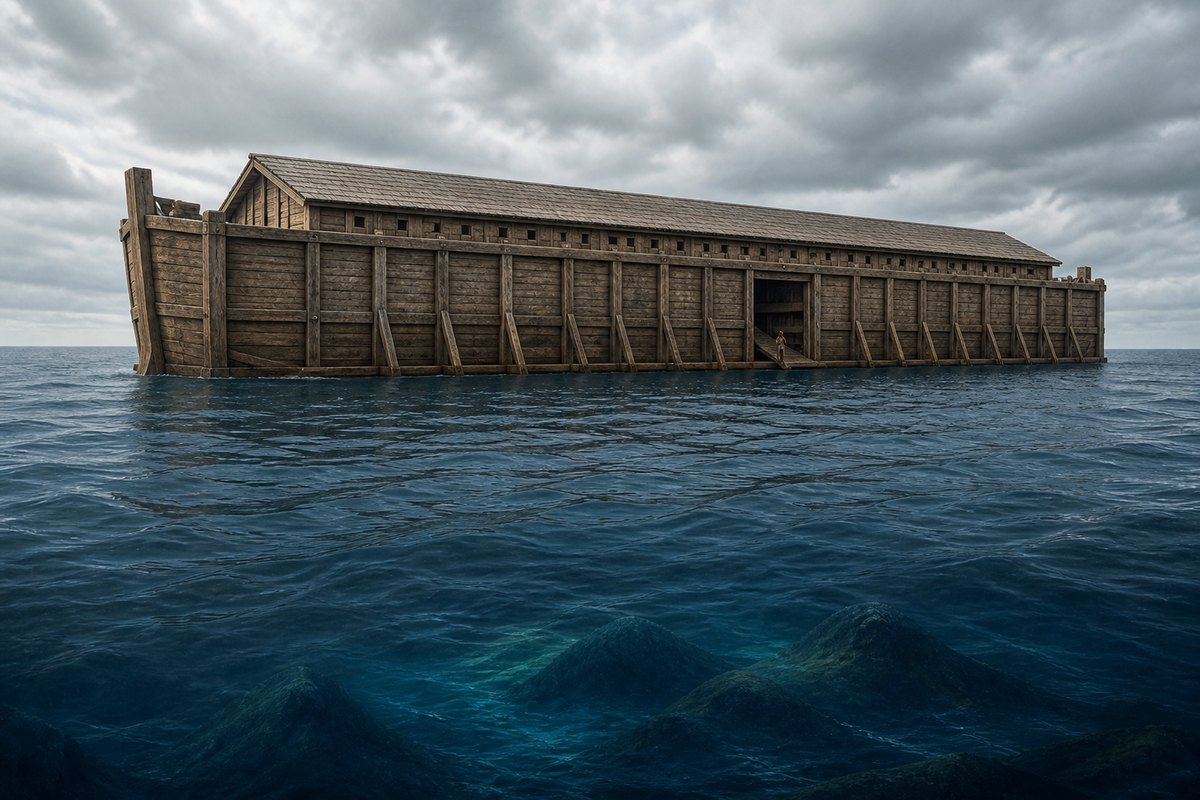
The Ark floats above a world whose mountains are covered while Flood waters prevail and later recede.
Genesis presents the Flood as divine judgment and preservation. Noah's household and the creatures aboard survived inside the Ark while rain fell, the fountains of the great deep opened, and water covered the mountains. The Ark remained afloat until the waters receded and the land emerged again. The reported fifteen-cubit clearance establishes only a minimum above the covered high ground, not the complete depth of the Flood.
The complete entry continues in the book with its model, illustrations, sensitivity cases, and source notes.
Entry 78 · Matt 2:1–10
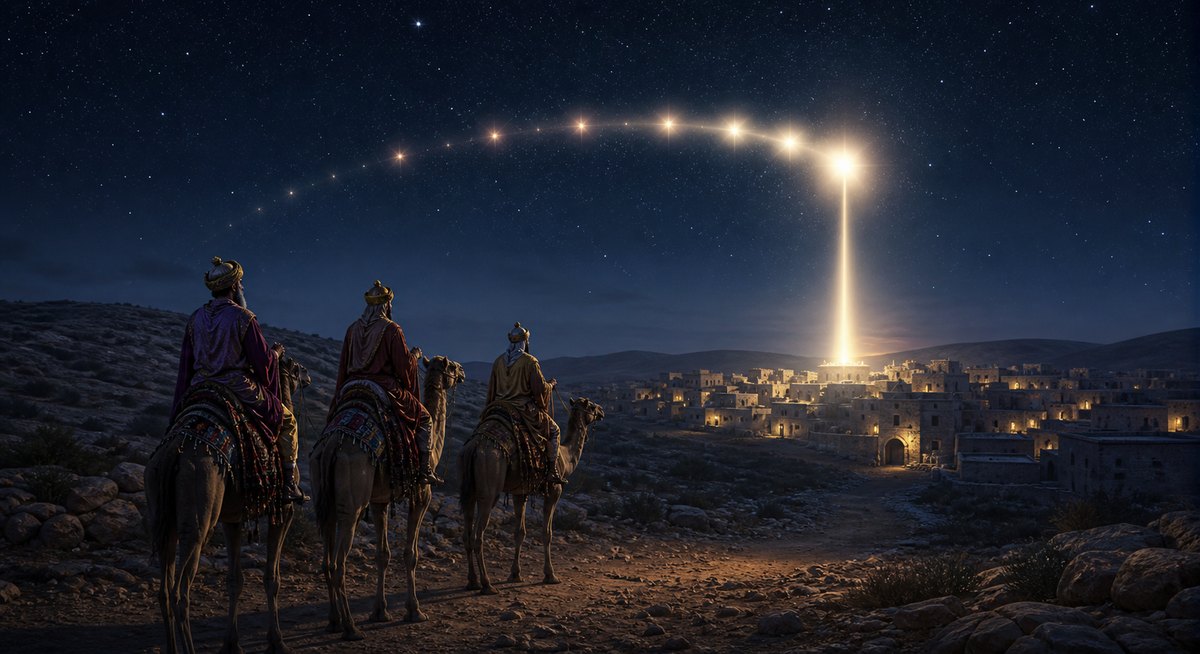
The star goes ahead of the Magi and stops over the place where the child is, ending their journey.
The travelers first saw the star at its rising. After their meeting with Herod, it appeared to them again, went ahead of them, reached the destination, and stopped over the place where the child was. They recognized that the guidance had ended and rejoiced. The sequence is accepted as Matthew reports it: real movement and a purposeful stop, not a fixed star misunderstood through changing viewing angle.
The complete entry continues in the book with its model, illustrations, sensitivity cases, and source notes.
The sample deliberately omits complete calculations and conclusions. It is meant to show the book's range and method without reproducing the manuscript.